Community · Column
The Great Gatsby by F. Scott Fitzgerald
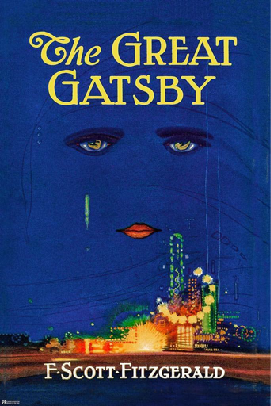
Never having read any Fitzgerald, I gave myself a quick biographical tour. His life was a sad Greek tragedy, and a poor introduction to a book that so many have called The Great American Novel. With Fitzgerald’s life in mind, turning to the first page seemed like walking through the door to a play that had commanded a high ticket price but then only achieved dismal reviews.
It wasn’t bad! Perhaps the reviews were wrong.
The book is a consummate, unapologetic plagiarism of Fitzgerald’s real life. The characters are real people with only the names changed. Fitzgerald was one of them. Many dramatic events are real. The locations are real locations with new names. Reviews of the book quote Daisy/Zelda from a real letter that Zelda, his real-life wife, wrote about their own daughter when she was born, “I’m glad it’s a girl. And I hope she’ll be a fool — that’s the best thing a girl can be in this world, a beautiful little fool.” It’s a great quote. But I wonder if people in 1925 knew he was just copying life? The 1925 Time Magazine review didn’t seem to know. It was short, caustic, and got at least one detail wrong. The critic might not have read the book.
After only a few pages, a controversial racist book written by a man named “Goddard” prompts a discussion among the characters. “Goddard” was a real person who wrote a book with the same title used in the novel just five years earlier, but his real name was “Stoddard”. It’s a typical example of the whole book. You can learn a lot about what was happening in 1925 by reading this book.
Some people are attracted to The Great Gatsby by the mysterious symbolism found throughout the book.
The “eyes of TJ Eckleburg” is actually an optician advertisement in the “valley of ashes". I decided that it is Fitzgerald’s stand-in for a watchful, but impotent God.
The “green light” at the end of Tom and Daisy’s boat dock is probably the most symbolic element of the book, even though it’s only repeated three times – at the beginning, middle, and end of the book. It helps to understand the book’s foundation to know that the light represents unreachable desire.
Compared to his first two books, The Great Gatsby was not the success he needed to maintain the lifestyle of Zelda, who married him primarily because his first novel did sell so well. But after a pause due to Fitzgerald’s personal implosion at the end of his life, it has steadily gained in stature. The book now lives in the Valhalla of Great Books. It’s worth asking how it achieved such a triumph.
The success that The Great Gatsby was able to achieve is probably due to three things.
The first is one of the greatest book covers ever created. It made people pick up the book up and look at it. A Spanish graphic designer named Francis Cugat painted it. People stop and stare when they first see it. I did. This one painting kept Cugat from being an unknown today.
Once hooked, enough people in 1925 read the book to encourage Fitzgerald. The writing style is clever and engaging. But a lot of books have that quality. This one gave the readers a sensual kick of the new age of hedonism, combined with a covering moralistic guilt so they can really enjoy it. There is even a whiff of homosexuality like faded old cigarette smoke. The first-person narrator, Nick, tosses off a statement as though it’s obvious, “Dishonesty in a woman is a thing you never blame deeply.” A few paragraphs further on, Nick calls himself one of the few honest people.
Hypocrisy was the American way in 1925. Alcohol was prohibited from 1920 to 1933, yet drinking is the main activity of most of the characters, most of the time. Fitzgerald died from alcoholism when he was only 44.
After detailing the outrageous wealth of Gatsby, the book turned ‘soap opera’ so quickly that it caught me by surprise. In one chapter, Gatsby is touring room after room after room in his fabulous palace. In the next, Gatsby is sniping with Tom, the husband of the wife that Gatsby covets, in a hot hotel room. (No air conditioning in 1925. Who knew?) As the world turned, and the edge of night grew near, Gatsby learned he had only one life to live.
The book’s most gripping feature was the voyeurism of watching the idle rich rise and fall. It filled an aching hole in the lives of the many who were not rich.
These features kept the book in print while a new reputation as an important and historic picture of a fascinating age emerged. Today, that has created a wholly new and delightful property. I have long believed that reading a book with the Internet – the hive mind of our species – as a reading companion is the very best way to do it.
When I read a book, a thousand questions pop into mind. Any question can be answered by the Internet. Especially since colleges have started to require papers about the book from students whose minds are elsewhere, there are a dozen web pages that list and describe all the characters and explain any obscure phrase. Do you want to know why the philosopher Kant would stare at a church steeple? The Internet has the answer. Curious about the “secret of Castle Rackrent”? It’s in a book that was popular at the time, and the Internet will tell you all about it.
Readers today see the roaring 20’s through a kaleidoscopic lens created by The Great Gatsby. But it’s like seeing famine victims on television. We read it and we think we understand.
But it’s a great read anyway.
Postscript:
I didn’t see it even mentioned in any of the dozens of web pages devoted to Fitzgerald, but his tombstone reveals an interesting detail. I always wondered why he styled himself as “F.” Scott Fitzgerald. His tombstone has it as “Francis Scott Key Fitzgerald”. The “Find a Grave” website states that he was a distant cousin, but it doesn’t say anything about why he changed it.