Community
When Fear Took Flight (93)
thanks to Linda Brinkley’s facebook post which inspired research for this article. Also thanks to Charlotte Liam who wrote the article (https://ifeg.info/2026/08/24/honor-elizabeth-wainios-final-moments-on-flight-93-the-story-of-a-young-woman-who-faced-fear-with-love-and-courage/#google_vignette) from which the following is summarized.
On the morning of Sept. 11, 2001, 40 ordinary people boarded United Airlines Flight 93. They were travelers, parents, spouses, friends, workers and young people with places to go and people waiting for them.
None expected to become part of history.
They expected an ordinary day—business meetings, family plans, vacations and the simple routines of travel. Among them was 27-year-old Honor Elizabeth “Lizz” Wainio, a young woman returning from a friend’s wedding in Italy and traveling to San Francisco for work. Like everyone aboard, she had a future she expected to continue.
Then, at 9:28 a.m., everything changed.
The aircraft was hijacked. As passengers made phone calls and learned that other planes had been deliberately crashed into the World Trade Center and the Pentagon, they began to understand what was happening. This was not simply a hijacking. Their airplane was being turned into a weapon.
And in that terrible realization, they faced a choice.
They could remain still and hope for the best. Or they could act.
They chose to act.
What followed is one of the most remarkable examples of ordinary people choosing courage and selflessness in the face of overwhelming fear. The passengers and crew were not soldiers or first responders. They had no special training for the situation they faced. They were simply people who understood that their actions might determine whether others on the ground lived or died.
They knew the risk.
They knew they might not survive.
And they acted anyway.
That decision was not made because they were fearless. It was made because something became more important than their fear: protecting other people.
Among those aboard was Lizz, who called her stepmother during the flight. In what became her final conversation, she expressed her love and concern for her family before saying goodbye. Her story is a reminder that even in the most frightening moments, people can remain connected to those they love—and can find the strength to think beyond themselves.
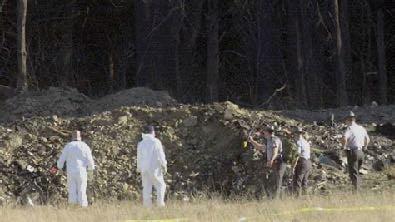
The passengers' effort to regain control of Flight 93 ended when the plane crashed into a field near Shanksville, Pennsylvania, at 10:03 a.m. All 40 passengers and crew members were killed. But their decision to resist prevented the hijackers from reaching their intended target, believed to have been the U.S. Capitol or the White House.
They could not know whether they would succeed.
They could only know that they had to try.
That is what makes Flight 93's story so powerful. It is not simply a story about tragedy. It is a story about what people are capable of when confronted with unimaginable circumstances.
Fear was present.
But so was courage.
Self-preservation was natural.
But so was the selfless decision to protect others.
The people aboard Flight 93 remind us that heroism does not always begin with extraordinary people. Sometimes it begins with ordinary people making an extraordinary choice.
Today, the Flight 93 National Memorial honors those 40 lives. The Tower of Voices, with its 40 wind chimes, represents each passenger and crew member. Their sounds rise and mingle with the wind—a fitting symbol for 40 individual lives becoming part of one shared story.
Behind every name was a life.
Behind every life was a family.
Behind every family were hopes, plans and people who loved them.
And behind the history of Flight 93 was a choice made by human beings who were afraid, who understood the danger, and who nevertheless chose to act for the sake of others.
More than two decades later, that may be the most enduring lesson of Flight 93:
Courage is not the absence of fear. It is the decision that something else matters more.
On that September morning, 40 people faced the unimaginable. They chose to stand together. They chose to resist. And, ultimately, they chose the lives of people they would never know over their own.
In the darkest of circumstances, they showed us one of humanity's greatest possibilities—that even when fear tells us to save ourselves, compassion and courage can call us to save one another.