Front Page · Op-ed
Rally the Troops for Cougars
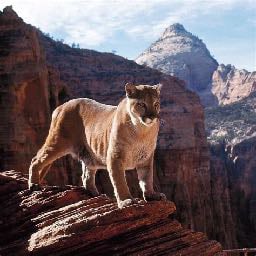
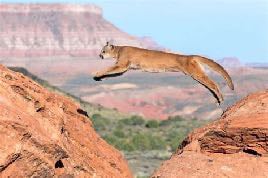
Last Thursday there was a presentation about cougars (AKA Mountain Lions) at the CCC. We went expecting a fun and informative evening and we came out ready to fight — fight to maintain Utah’s dwindling cougar population.
Utah’s deer population has also declined. From a Springdale perspective, that’s hard to reconcile with the number of deer wandering through town, determined to remind us they were here first. For whatever reasons, probably fueled by Utah’s hunters, the Utah legislature has decided to test whether reducing the mule deer’s main predator, the cougar, will increase the deer population significantly. So restrictions on cougar kills have been removed. This study will last until 2029. If it proves sufficiently effective in increasing deer population, next steps (perhaps to continue with unfettered cougar elimination) will be decided.
The Springdale Sun encourages its readership to contact our legislators to protest unfettered cougar kills as a way of increasing deer population.
Joseph Elison (Springdale’s representative to the House): 801 657 1006 OR jelison@le.utah.gov Derrin R. Owens (our representative to the Senate) 435 851 1284 OR derrinowens@le.utah.gov
When contacting legislators, you can strengthen your case by emphasizing one or more of the following reasons why efforts to boost deer populations through cougar reduction should be halted and reevaluated:
1. Snares, which are currently allowed, as a means of capturing cougars also capture dogs, cats, even people. At the very least, that particular option should be eliminated during this study period - and forever.
2. Historically, attempts to increase populations of animals by reducing predators have backfired. (see otter removal along the Pacific Coast, Australia’s cane toad disaster, mongoose introduction in Hawaii and the Caribbean, wolf eradication and deer/elk overabundance in North America). The ones that did prove successful were usually reducing predators that were invasive and did not evolve alongside its prey.
3. In many ecosystems, removing large predators allows smaller predators ("mesopredators") to increase dramatically. Scientific studies have documented situations where killing apex predators leads to increases in foxes, coyotes, feral cats, or other mid-sized predators, which can then place even greater pressure on prey species than before. Research has shown that lethal control of apex predators can trigger unintended cascading effects throughout ecological communities. Removing cougars does not necessarily produce more healthy deer. It can alter predator communities in ways that are difficult to predict and manage.
4. Predators often remove vulnerable, sick, or weakened animals. Research on mountain lions in Colorado found that they killed chronic wasting disease-infected mule deer at rates significantly higher than expected by chance. Thus, reducing cougar populations may remove a natural mechanism that helps cull diseased animals from deer herds before they spread infection. This is a strong example of how removing predation to solve one perceived problem can unintentionally worsen another. Chronic Wasting Disease is a very real, documented danger which affects deer, elk, moose, and other members of the cervid family. Infected animals gradually experience weight loss, behavioral changes, neurological impairment, and eventual death. There is currently no treatment or vaccine that will eliminate the prions which cause the disease and these infectious prions can persist in the environment for years, making disease control extremely challenging. CWD has spread across much of North America and continues to expand geographically. At a time when chronic wasting disease continues to spread, reducing cougar populations is a policy that warrants reexamination.
5. Cougars contribute to ecosystem function beyond disease management. Their predatory behavior helps regulate prey abundance, supports biodiversity, and influences ecological processes across multiple trophic levels. These benefits extend beyond deer populations and affect the overall health of Utah's landscapes.
6. Habitat quality, water availability, and migration corridors may be far more important drivers of deer numbers than cougar populations, thus indicating other potential deer population increase options.
7. Some Utah residents understandably worry about livestock losses or human safety. These concerns are real, but they can often be addressed through targeted management practices rather than broad reductions in cougar populations. Improved livestock protection measures, compensation programs, and public education can help minimize conflicts while preserving the ecological benefits cougars provide. Cougar attacks on humans are so rare, you’re more likely to be killed by a vending machine falling on you.
Can we all say, “Unintended consequences”? If you know anyone in Springdale who does not receive The Springdale Sun, please encourage them to do so. Also, tell them about this opportunity to spend 10 minutes to make a difference. If you know anyone who lives in Utah, but not in Springdale, tell them about this recent decision by the Utah legislature and encourage them to contact their representatives as well.
THERE ARE MANY PEOPLE IN SPRINGDALE WITH THE PASSION AND ABILITY TO HELP COLLECT, ORGANIZE, AND ANALYZE DATA FOR THIS ONGOING STORY. THERE ARE FAR FEWER WITH THE TIME TO DO IT. (PROBABLY 5 HOURS/WEEK.) BUT SOMEONE DOES. WHO ARE YOU? YOU’RE OUT THERE. I KNOW IT. PLEASE CONTACT ME: 801 360 3252 OR bethbencutler@gmail.com
OR VOLUNTEER SOMEONE ELSE. 😁