Town Hall
🎶 I Found My Thrill on “Crybaby Hill”🎶
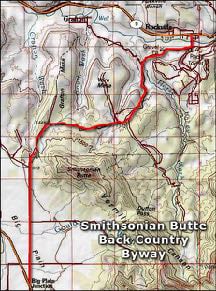
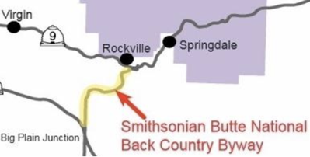
“Crybaby Hill” or “Crybaby Road,” as some hardy locals like to call the section near Rockville, could some day serve as a future transportation corridor between the Zion area and communities to the south.
Officially known as the Smithsonian Butte National Back Country Byway, the route connects near Rockville and extends south toward Apple Valley, eventually linking travelers to the Highway 59 corridor serving Hildale and Colorado City. The road is currently unpaved and is widely known for steep grades, sandy sections, and difficult driving conditions that often require high-clearance or four-wheel-drive vehicles.
The road also carries a long local history. Residents familiar with the route give anecdotal accounts that portions of it were once traveled by smaller tour buses and passenger vehicles decades ago, before modern highway infrastructure became the region’s primary transportation network. Over time, erosion, off-road traffic, and route changes may have altered some of the original switchback sections, leaving behind the steeper and rougher alignment many drivers recognize today.
Jurisdiction over the roadway is not simple. Portions of the route involve federal Bureau of Land Management lands, while counties throughout southern Utah have long asserted roadway rights and maintenance authority over certain historic routes under RS-2477 claims and related agreements. Public records and legal disputes involving backcountry roads in southern Utah show ongoing tensions between access, maintenance, recreation, environmental concerns, and local transportation needs.
As of June 2026, no publicly confirmed paving project for Smithsonian Butte Road has been identified through official state or county announcements. However, discussions about improving strategic dirt roads in southern Utah have become increasingly common as communities continue to grow and workforce commuting patterns evolve.
The issue has practical implications for the Zion region. Many employees who work in Springdale and nearby tourism-related businesses commute from communities such as Hildale, Colorado City, Hurricane, and La Verkin. A more reliable north-south route through the backcountry could potentially reduce travel distances and provide an alternate connection to State Route 9.
At the same time, any major changes to the roadway would likely generate debate. The route is valued not only for transportation access, but also for its scenic and recreational character. Off-road enthusiasts, local residents, conservation groups, and government agencies often have differing views on whether remote backcountry roads should remain primitive or be upgraded for broader public use.
For now, the future of Smithsonian Butte Road appears to remain uncertain. What is clear is that the route continues to occupy a unique place in the region’s history — somewhere between backcountry trail, scenic byway, and potential transportation corridor.